



Remote and hybrid teams lose up to 36% of action items when meeting follow-ups lack clear structure and timely delivery. The problem costs companies thousands in repeated meetings and missed deadlines. Prompt and well-structured meeting recaps transform vague discussions into concrete outcomes, driving measurable gains in task completion and team alignment. You'll discover seven evidence-backed practices that cut miscommunication by half and recover hours of productivity each week.
Table of Contents
Comparing Follow-Up Methods: Manual Vs. Automated Approaches
Explore Kitra Solutions To Streamline Your Meeting Follow-Ups
Key takeaways
Point | Details |
|---|---|
Clear ownership increases completion | Action items with specific owners and deadlines boost completion rates by 25% in remote teams. |
Timing matters critically | Sending follow-ups within 12-16 hours maximizes task recall before memory decay sets in. |
Focus beats verbatim transcripts | Well-structured summaries reduce follow-up emails by 80% compared to lengthy transcripts. |
Gratitude strengthens teams | Expressing appreciation in recaps enhances psychological safety and team cohesion. |
Standardization cuts miscommunication | Consistent follow-up protocols reduce miscommunication incidents by 50%. |
Criteria for effective meeting follow-ups
You need a framework to evaluate whether your follow-up practices actually drive results. The most successful meeting recaps share five core characteristics that separate productivity gains from wasted effort.
Clear ownership stands as the foundation. Every action item must name exactly one person responsible for delivery. Effective meeting follow-up increases project completion rates by 25% when you eliminate ambiguity about who owns what. Vague assignments like "the team will handle it" guarantee nothing gets done.
Timing drives retention and momentum. Your brain loses meeting details rapidly after you leave the room. Sending recaps within 12-16 hours captures decisions while they're fresh and actionable. Wait beyond 24 hours and you've already lost critical context that leads to clarifying emails and delays.

Focused summaries beat comprehensive transcripts every time. Executives and team members need decisions, action items, and deadlines, not a verbatim record of every tangent. Prompt and well-structured meeting recaps prioritize what matters: what you decided, who's doing what, and when it's due.
Standardization creates consistency across your organization. When every meeting produces a predictable format, readers know where to find critical information instantly. This reduces the back-and-forth emails asking for clarification that plague unstructured follow-ups.
Documentation prevents blame and confusion. Written records protect teams from "I never agreed to that" disputes and ensure distributed teams access the same information regardless of time zone.
Pro Tip: Create a one-page template that includes sections for decisions, action items with owners and deadlines, dependencies, and next meeting date. Use it for every meeting to build a searchable archive of team commitments.
Assign single owners to prevent diffusion of responsibility
Highlight dependencies so teams understand sequencing
Include context for decisions to avoid future confusion
Keep formatting consistent for quick scanning
7 best practices for meeting follow-ups
Implementing specific techniques transforms your meeting outcomes from fuzzy to actionable. These seven practices reflect what high-performing teams do consistently to maintain clarity and drive completion.
Send follow-ups within 24 hours, ideally 12-16 hours post-meeting. Memory retention drops sharply after the first day. Teams implementing structured post-meeting processes complete 36% more action items on time compared to those without prompt recaps. Your recap becomes exponentially more valuable when it arrives before competing priorities crowd out meeting commitments.
Lead with next steps and clearly assigned action items. Busy professionals scan emails in seconds. Put the most critical information at the top: who's doing what by when. Save background and discussion notes for the bottom where interested readers can find them.
Use specific deliverables and deadlines to eliminate ambiguity. Replace "John will follow up on the proposal" with "John will email the revised proposal with updated pricing to Sarah by Thursday, March 15 at 5pm EST." Specificity removes wiggle room and prevents the "I thought you meant next week" confusion.
Include dependencies explicitly to clarify priorities. When Sarah's work depends on John's proposal, state it: "Sarah will begin the client presentation (dependent on John's proposal by March 15)." This prevents teams from starting tasks prematurely or blaming delays on unclear sequencing.
Express appreciation to enhance team morale and psychological safety. A simple "Thanks for the creative solutions in today's brainstorming" or "I appreciate everyone staying late to finalize this decision" costs nothing but builds goodwill. Teams with higher psychological safety innovate faster and take smart risks.
Avoid excessive detail and focus on outcomes instead of verbatim transcripts. Meeting summaries capturing decisions and action items reduce follow-up emails by 80% because they answer the questions people actually have. Your recap isn't a legal transcript. It's a tool for execution.
Use standardized templates or tools to ensure consistency across meetings. Whether you use a simple Google Doc template or automated software, consistency helps readers find information fast and ensures nothing gets forgotten. Prompt and well-structured meeting recaps become second nature when you follow the same format every time.
Pro Tip: Create a shared folder where all meeting recaps live in one searchable location. Name files with the date and meeting topic (e.g., "2026-03-14 Product Roadmap Review") so anyone can quickly locate past decisions and commitments.
Comparing follow-up methods: manual vs. automated approaches
You face a choice between traditional manual note-taking and AI-powered automation for meeting follow-ups. Each approach carries distinct trade-offs in time investment, accuracy, and scalability that impact your team differently.
Aspect | Manual Follow-ups | AI-Automated Follow-ups |
|---|---|---|
Time per recap | 30-45 minutes average | 3-5 minutes for review |
Accuracy | Depends on note-taker skill | Consistent, captures all dialogue |
Timeliness | Often delayed 24+ hours | Can deliver within 1 hour |
Format consistency | Varies by person | Standardized automatically |
Scalability | Limited by human capacity | Handles unlimited meetings |
Manual follow-ups demand significant time and cognitive load. You're simultaneously participating in the meeting and trying to capture key points accurately. This split attention means you either miss nuances in the discussion or fail to record critical decisions. Typing up notes after the meeting adds 30-45 minutes per session, and project managers spend 23% of their workweek on documentation tasks instead of leading teams.
Delayed distribution compounds the problem. When you send recaps days later because you're swamped with other work, action items lose urgency and details fade from everyone's memory. Recipients question the accuracy of late recaps and fire off clarifying emails that waste everyone's time.
Automated tools fundamentally shift this equation. AI transcription cuts documentation time by 85%, saving over 340 hours per project manager annually. You participate fully in discussions while the system captures everything. Review takes minutes instead of half an hour, and you can deliver recaps within an hour of the meeting ending.
Accuracy improves dramatically. AI systems don't miss statements because they're thinking about their next point. They capture verbatim dialogue, then extract decisions and action items using natural language processing. This creates a reliable record that settles disputes about what was actually agreed.
Standardization happens automatically. Every recap follows the same template with sections for decisions, action items, and next steps. Your executives and team members know exactly where to look for critical information, eliminating the variability that comes from different note-takers having different styles.
AI transcription benefits extend beyond time savings to improved accuracy
Faster turnaround increases the likelihood busy executives actually read recaps
Consistency reduces miscommunication that stems from format variations
Scalability allows growing teams to maintain quality without hiring more administrators
Choosing the right follow-up strategy for your team
Your team's size, culture, and workflow complexity dictate which follow-up approach delivers the best return on effort. Small teams face different constraints than enterprise organizations managing dozens of concurrent projects.
Small teams (under 15 people) benefit from structured email templates that emphasize clarity and gratitude. You don't necessarily need sophisticated tools when meeting volume is manageable. Create a simple template with sections for decisions, action items with owners and due dates, and a brief thank you. Assign one person as the default note-taker for consistency, and rotate monthly to prevent burnout.
Medium to large teams (15-100 people) should consider automated transcription paired with standardized templates. Meeting recap strategies at this scale require systems that don't depend on individual heroics. Volume alone makes manual documentation unsustainable. Organizations using standardized follow-up protocols experience a 50% reduction in miscommunication because everyone knows what to expect.
Team Size | Recommended Approach | Key Benefit |
|---|---|---|
Under 15 | Structured email templates | Low cost, easy adoption |
15-100 | AI transcription plus templates | Scalable, consistent quality |
100+ | Integrated meeting platforms | Enterprise features, analytics |
Hybrid teams face unique challenges with distributed participation and time zone differences. Prioritize rapid recap delivery within 24 hours maximum to reinforce memory retention for both in-office and remote participants. Video recordings help remote team members who couldn't attend live, but don't use recordings as a substitute for written summaries. Few people have time to watch hour-long videos searching for their action items.
Establish policies for assigning single owners per action to prevent the "everyone's responsible so no one's responsible" problem. In virtual settings, verbal commitments fade fast. Written accountability in the recap creates a shared record everyone can reference.
Balance thoroughness and brevity based on stakeholder preferences. Senior executives often prefer bullet points highlighting decisions and their action items only. Project teams working on complex technical implementations need more context and detail. Create two versions if necessary: a concise executive summary and a detailed team version.
Start with a pilot program using your chosen approach for one team or project
Gather feedback after four weeks and adjust your template or tool selection
Train team members on expectations for follow-up quality and timing
Review compliance monthly to ensure the system stays effective as your team grows
Explore Kitra solutions to streamline your meeting follow-ups
Your team's productivity depends on systems that work invisibly in the background. Kitra meeting productivity tools combine AI-powered transcription, automatic action item extraction, and standardized templates to eliminate the documentation burden that consumes 23% of project managers' time. You get meeting recaps delivered within an hour, formatted consistently, and integrated directly into your workflow.
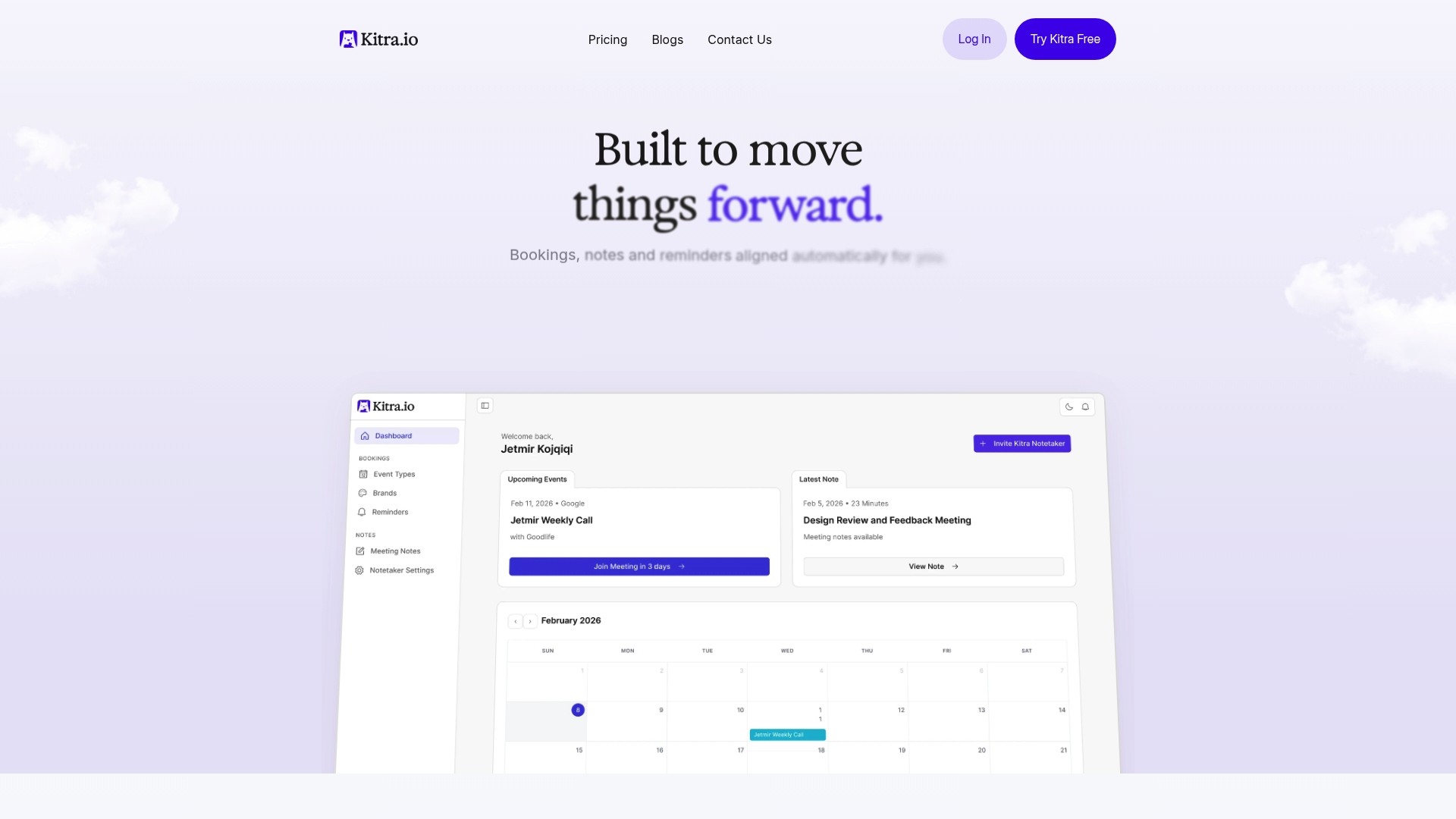
Kitra meeting recap solutions help you implement every best practice covered in this article without adding work to your team's plate. Automated notetaking captures decisions accurately while you focus on the discussion. Action items get assigned, tracked, and followed up automatically. Your team spends less time clarifying commitments and more time delivering results.
FAQ
What is the ideal timing to send a meeting follow-up email?
Send follow-ups within 12-16 hours post-meeting to maximize task recall and engagement. This window captures decisions while they're fresh in everyone's memory. Delays beyond 24 hours significantly reduce effectiveness due to natural memory decay and competing priorities that crowd out meeting commitments.
How can assigning ownership improve meeting follow-up outcomes?
Assigning exactly one owner per action item prevents diffusion of responsibility where everyone assumes someone else will handle the task. Clear ownership eliminates confusion about who's accountable and dramatically reduces the clarifying emails that waste team time. Named owners feel personal accountability that drives timely completion.
What should be included in an effective meeting summary?
Include clear decisions with brief context, assigned action items with specific owners and deadlines, and any dependencies between tasks. Meeting summaries capturing these elements reduce follow-up emails by 80% because they answer the questions people actually have. Exclude verbatim transcripts and tangential discussions to maintain focus on what matters for execution.
Why is expressing gratitude important in follow-up communications?
Expressing gratitude enhances team dynamicsand psychological safety by acknowledging contributions and building positive relationships. Employees who feel appreciated report significantly higher trust in leadership and greater willingness to take initiative. A simple thank you costs nothing but compounds over time into stronger team cohesion and collaboration.