

The Problem With Scattered Productivity Tools
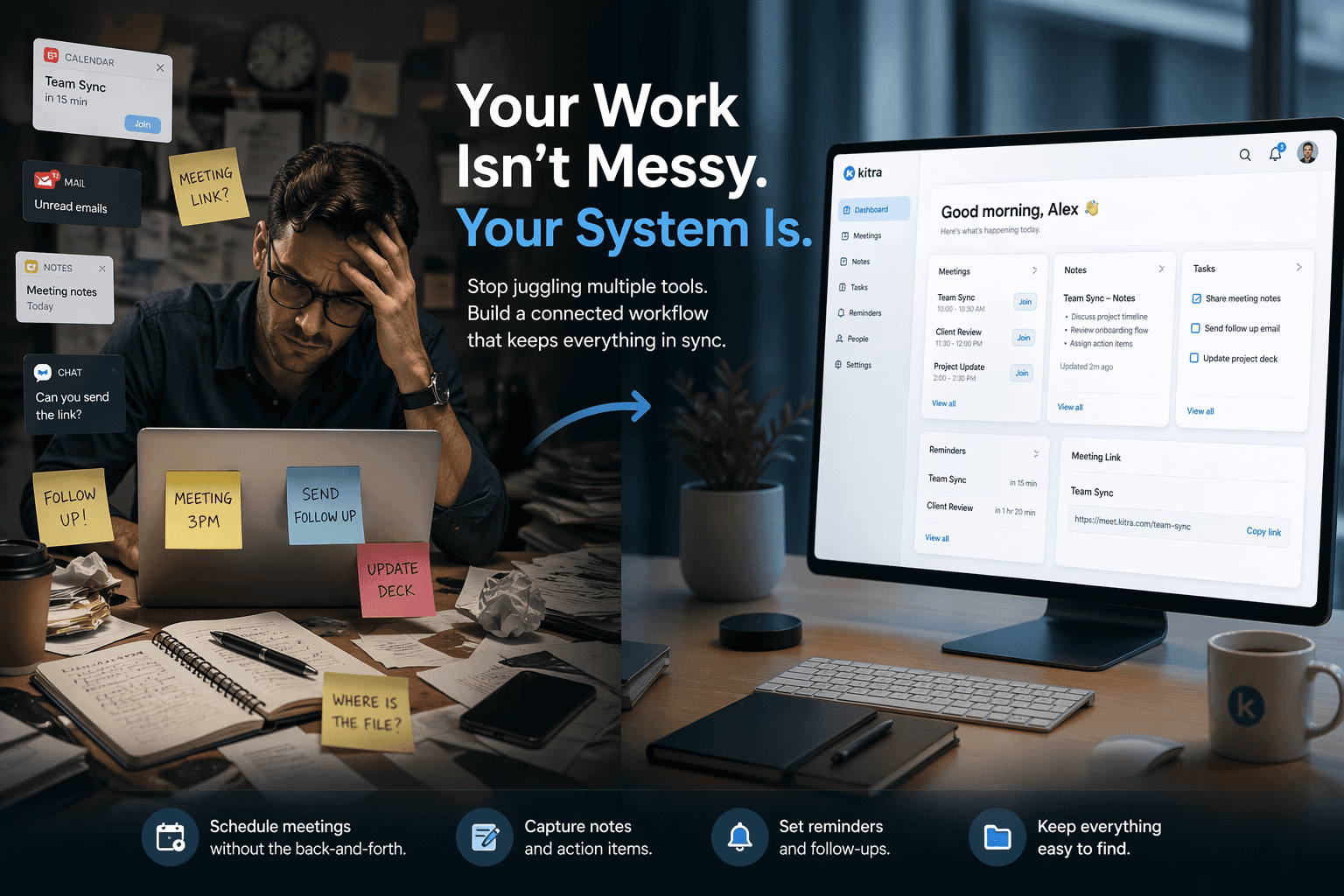
A typical workday often requires switching between different platforms just to stay organized. You check your calendar to see upcoming meetings, open another tool to review notes, and search through emails to find the meeting link.
These steps may seem small, but repeating them throughout the day slowly creates friction.
When tools don’t connect, your brain becomes the system that keeps everything together. You remember where notes are stored, track follow-ups from meetings, and mentally organize tasks across different platforms.
Over time this creates a constant feeling that something might slip through the cracks.
This is one of the biggest hidden challenges in workflow organization today.
Why a Productivity System Matters
A strong productivity system connects the essential parts of your workflow. Instead of scattered tools, meetings, reminders, notes, and follow-ups become part of the same process.
When a meeting is scheduled, reminders can automatically notify participants. Notes can be captured during the conversation, and follow-ups can be organized afterward.
The goal is not to add more tools, but to make the existing workflow easier to manage.
When systems work together, organizing work stops feeling like effort.
How to Organize Work More Effectively
Improving workflow organization doesn’t require complicated setups. Often it starts by simplifying the tools you rely on every day.
A well-structured workflow should help you manage a few key things:
scheduling meetings
capturing notes from conversations
setting reminders and follow-ups
keeping important information easy to find
When these elements are connected, your workflow becomes easier to navigate and maintain.
Fix the System, Not Yourself
If your work feels messy, it doesn’t necessarily mean you’re disorganized. In many cases, the system behind your workflow simply wasn’t designed to support how you actually work.
Once the right structure is in place, things become easier to manage. Meetings are easier to prepare for, notes are easier to find, and reminders happen automatically.
The goal isn’t to work harder at staying organized. The goal is to build a system where organization happens naturally.
Conclusion
Most productivity problems are not about discipline or habits. They come from fragmented systems that force people to manage information across too many places.
By improving your workflow organization and building a connected productivity system, work becomes simpler and more predictable. Instead of constantly searching for information, you can focus on the work that actually matters.